
Teaching Quran to children: Surah Al Qalam
Surah Al-Qalam Tafsir for Kids: Discover the Meaning of the Qur’an Through Stories, Character, and Interactive Learning
“Noon. By the Pen and what they write.” (Surah Al-Qalam 68:1)
When children read Surah Al-Qalam, they often ask fascinating questions.
Why did Allah take an oath by the pen?
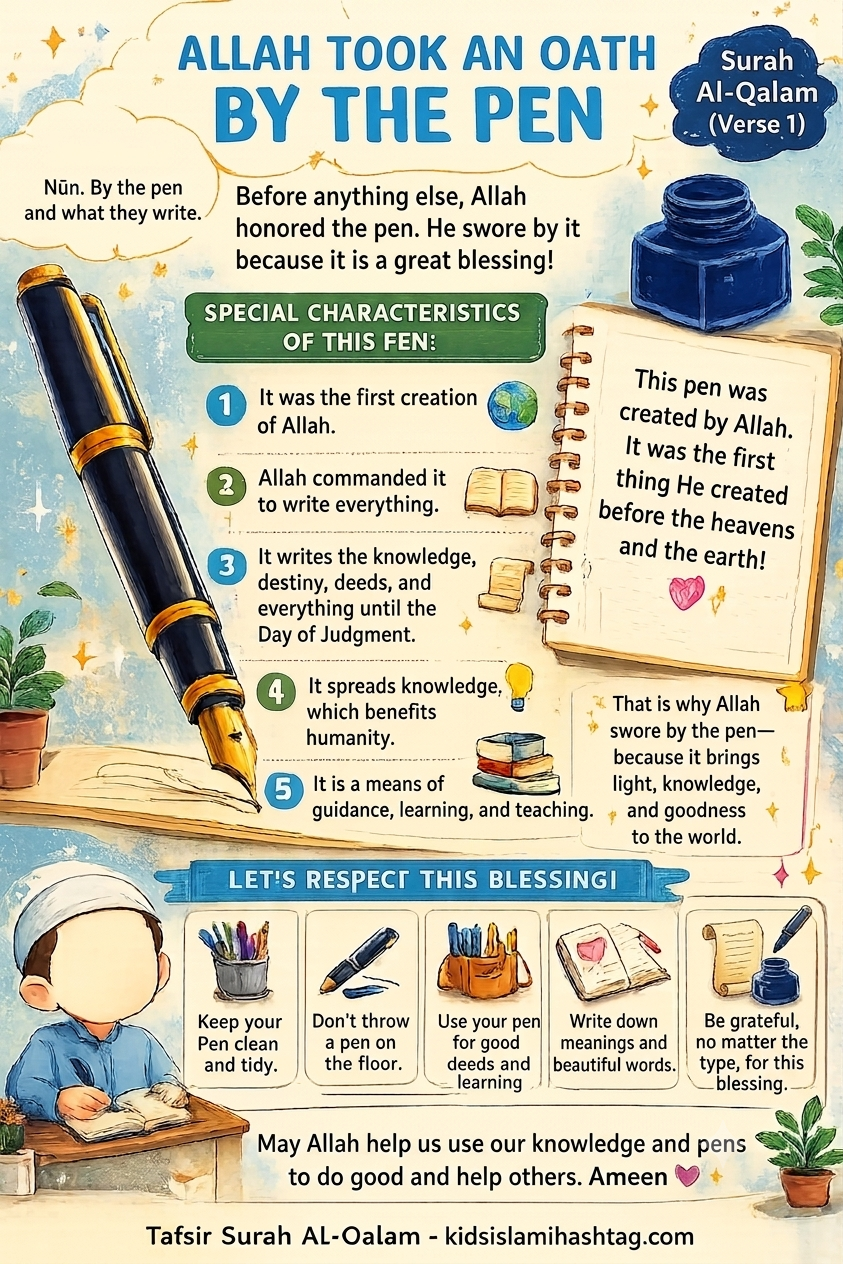
Why is this chapter called “The Pen”?
Why did Allah praise Prophet Muhammad ﷺ in this surah?
What can we learn from the story of the owners of the garden?
These questions open the door to one of the most beautiful introductions to the Qur’an.
At Kids.IslamHashtag.com, our Surah Al-Qalam Tafsir for Kids course helps children move beyond memorization and discover the wisdom, stories, and life lessons hidden within every verse.
Why Is the 68th Chapter of the Qur’an Called “The Pen”?
The Arabic word Al-Qalam means The Pen.
Allah begins this remarkable surah by saying:
ن ۚ وَالْقَلَمِ وَمَا يَسْطُرُونَ
“Noon. By the Pen and what they write.” (68:1)
Whenever Allah swears by something in the Qur’an, it teaches us that it is something of great importance.
Classical scholars explain that this oath highlights the honour of knowledge, writing, revelation, and the recording of deeds.
According to authentic narrations, Allah created the Pen and commanded it to write everything that would happen until the Day of Judgment. This teaches children that Allah’s knowledge encompasses everything and that nothing happens outside His wisdom and decree.
The pen is therefore not merely a writing tool—it is a symbol of knowledge, guidance, learning, and the preservation of truth.
The Importance of Knowledge in Islam for Kids
The first lesson of Surah Al-Qalam is the importance of knowledge.
Before speaking about the character of His Messenger ﷺ, Allah first honours the pen.
This teaches children that Islam is a religion built upon learning.
Knowledge helps us:
- know Allah better
- understand the Qur’an
- distinguish right from wrong
- make wise decisions
- benefit others
Children also learn that every pen should be respected because it is used to write beneficial knowledge, Qur’an, and good words.
Our class encourages children to love reading, writing, asking questions, and seeking Islamic knowledge from authentic sources.
Allah Defended His Beloved Messenger ﷺ
The people of Makkah falsely accused Prophet Muhammad ﷺ of being insane because they rejected his message.
Allah immediately defended His beloved Messenger.
He declared:
- You are not insane.
- You will receive an endless reward.
- You possess magnificent character.
This teaches children that standing for truth may sometimes invite criticism, but Allah knows the reality.
Prophet Muhammad’s Beautiful Character for Kids
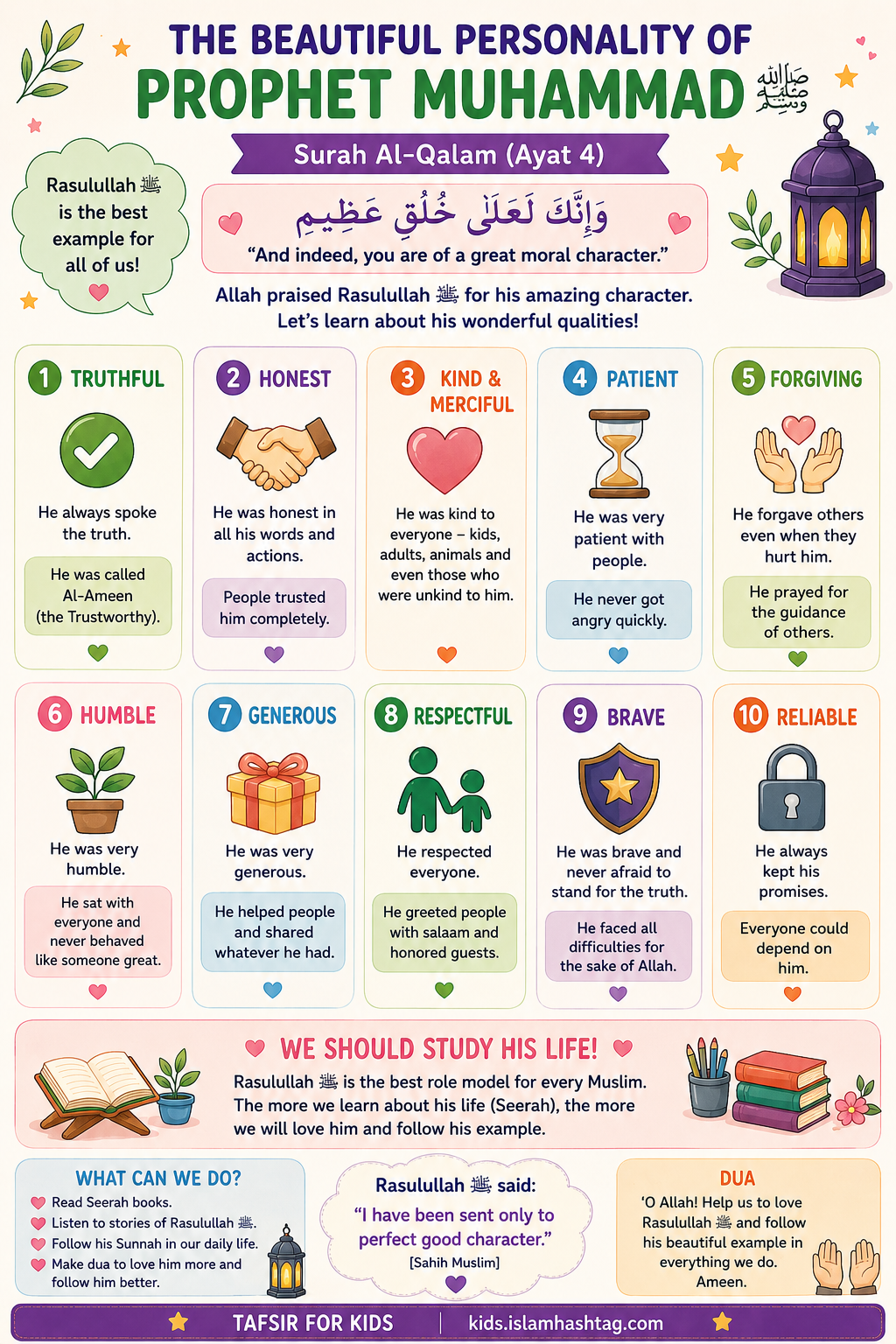
One of the most famous verses in the Qur’an says:
وَإِنَّكَ لَعَلَىٰ خُلُقٍ عَظِيمٍ
“Indeed, you are surely upon an exalted standard of character.” (68:4)
This single verse tells us that the greatest example of good manners is Prophet Muhammad ﷺ.
Using authentic hadith and classical tafsir, children learn about his beautiful qualities, including:
- truthfulness
- honesty
- kindness
- patience
- forgiveness
- generosity
- humility
- respect for everyone
- mercy
- excellent manners
Our goal is not only to teach children these qualities but to inspire them to practise one beautiful Sunnah every week.
As our beloved Prophet ﷺ said:
“I was only sent to perfect noble character.”
This becomes one of the central themes throughout the course.
Ten Bad Character Traits Every Muslim Child Should Avoid
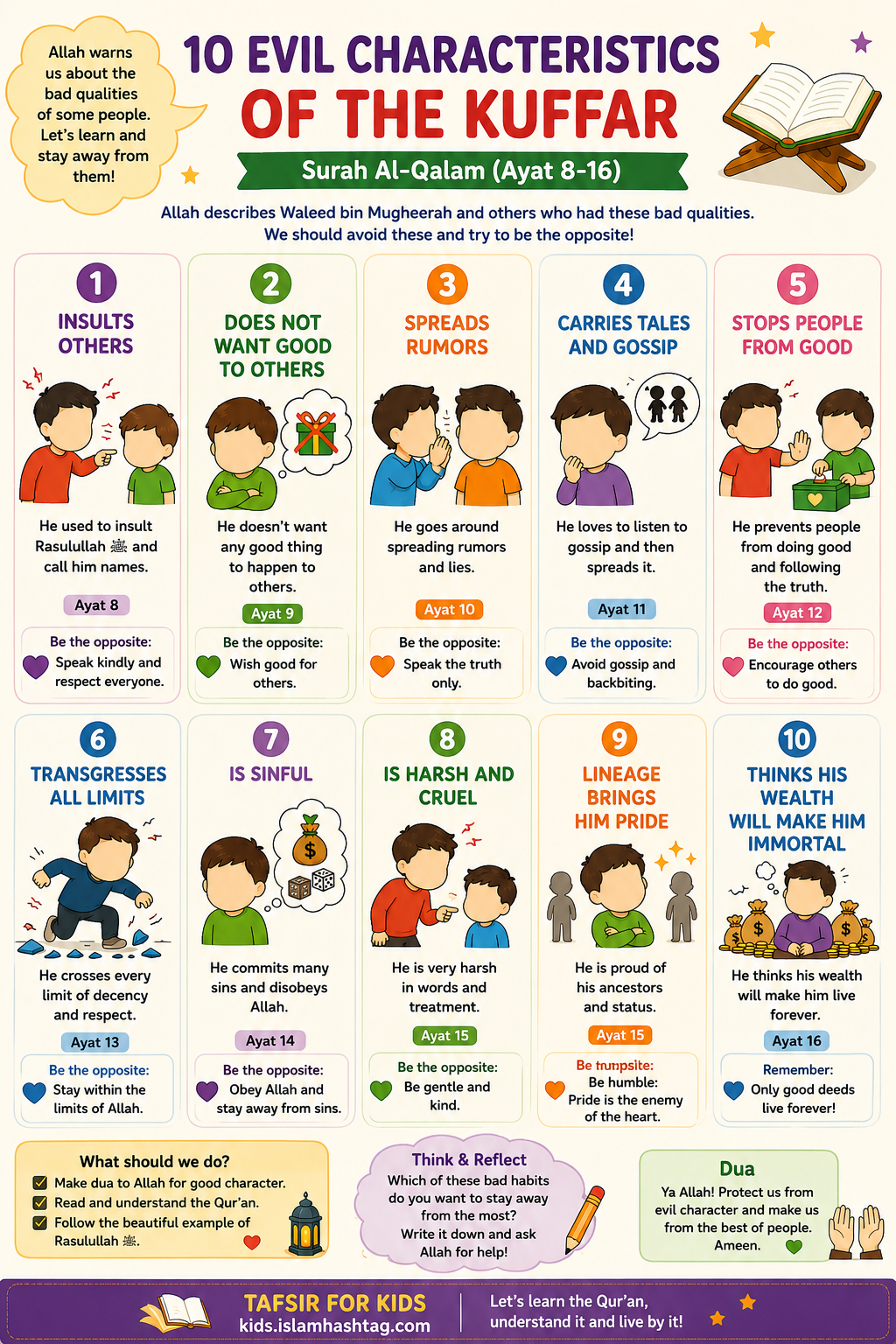
Allah also teaches children that learning good manners includes recognising bad manners.
Verses 8–16 describe destructive character traits that every believer should avoid.These are
- insulting others
- gossip
- spreading rumours
- preventing good
- sinful behaviour
- harshness
- arrogance
- pride because of wealth
- and other harmful qualities
Each lesson is explained with practical examples from school, friendships, and family life.
Instead of simply memorising verses, children learn how to improve their own character.
The Story of the Owners of the Garden
One of the most memorable stories in Surah Al-Qalam tells of wealthy brothers who wanted to harvest their fruits without allowing poor people to receive their share.
Before they awoke, Allah destroyed the garden.
Children discover timeless lessons about:
- gratitude
- generosity
- saying “In shaa Allah”
- sharing blessings
- avoiding greed
- trusting Allah
The story beautifully teaches that blessings remain only when we obey Allah and care for others.
What Makes Our Tafsir Class Different?
Every lesson is designed especially for children.
Classes include:
- interactive discussion
- engaging storytelling
- colourful worksheets
- quizzes and games
- practical life lessons
- character-building activities
- question-and-answer sessions
Rather than simply explaining Arabic words, we help children understand how the Qur’an changes everyday life.
Based on Classical Tafsir
The course draws upon authentic Islamic scholarship and classical tafsir while presenting the material in language children can easily understand.
Parents can feel confident that their children are learning the Qur’an with accuracy, clarity, and love.
Who Is This Course For?
This course is perfect for children who want to:
- understand the Qur’an instead of only memorising it
- develop excellent Islamic character
- increase their love for Allah and His Messenger ﷺ
- enjoy interactive online learning
- connect Qur’anic lessons to everyday life
Enrol Your Child in Our Surah Al-Qalam Tafsir Class
Imagine your child reading Surah Al-Qalam years from now and remembering not only its words, but also its lessons about knowledge, kindness, gratitude, generosity, and the beautiful character of Prophet Muhammad ﷺ.
That is the purpose of our Tafsir for Kids programme.
Join us at Kids.IslamHashtag.com and help your child begin a lifelong journey of understanding the Qur’an with authentic tafsir, engaging activities, and practical lessons that stay in the heart long after the class ends.
Discover more from Islam for Kids
Subscribe to get the latest posts sent to your email.
